


Overview
EventCRM was an AI-assisted operational tool built at 26ideas to simplify menu planning, reduce repetitive spreadsheet work, and support faster decision-making for catering teams handling complex multi-day events.
Role: Product Designer
Focus: Product thinking, workflow design, operational systems, UX research
The Industry Nobody Was Designing For
Despite rapid advances in software and automation, India’s catering and wedding industry still relies heavily on manual operational workflows.
The idea for EventCRM originated from a real operational pain point observed by our founder while running an event management company in the early 2010s. Most caterers still depended on notebooks, spreadsheets, and memory to manage large multi-day events, making planning slow, repetitive, and difficult to scale.
This became especially visible during menu planning, where caterers had to manually curate complex event menus, revise them repeatedly with clients, and coordinate ingredient planning across multiple days, meals, cuisines, and guest counts.

Understanding the Operational Complexity
Designing menus for Indian weddings is far more complex than simply selecting a list of dishes.
A single event can span multiple days, with each day containing several meals, each meal divided into multiple courses, and each course made up of dozens of dishes with their own ingredient requirements and dietary constraints.
Event > Sub-Event > Courses > Meals > Dishes > Ingredients

Defining the First Product Opportunity
As we mapped the end-to-end catering workflow, it became clear that the operational problem space was far too large to solve all at once.
Instead of trying to redesign the entire event management process, the first version of EventCRM focused on two high-impact bottlenecks:
Generating a strong first-draft menu in seconds instead of days
Automatically translating finalized menus into structured ingredient lists
This gave the product a focused starting point while still addressing some of the most time-consuming parts of the catering workflow & helped us validate whether caterers would trust software-assisted planning before expanding into larger operational systems.

Research at FAIC Hyderabad
With an early alpha version ready, our team took EventCRM to the Federation of All India Caterers (FAIC) expo in Hyderabad to validate the product with real users.
Over two days, we spoke with more than 200 caterers from across India, demoing the product, observing reactions, and documenting operational pain points in detail.
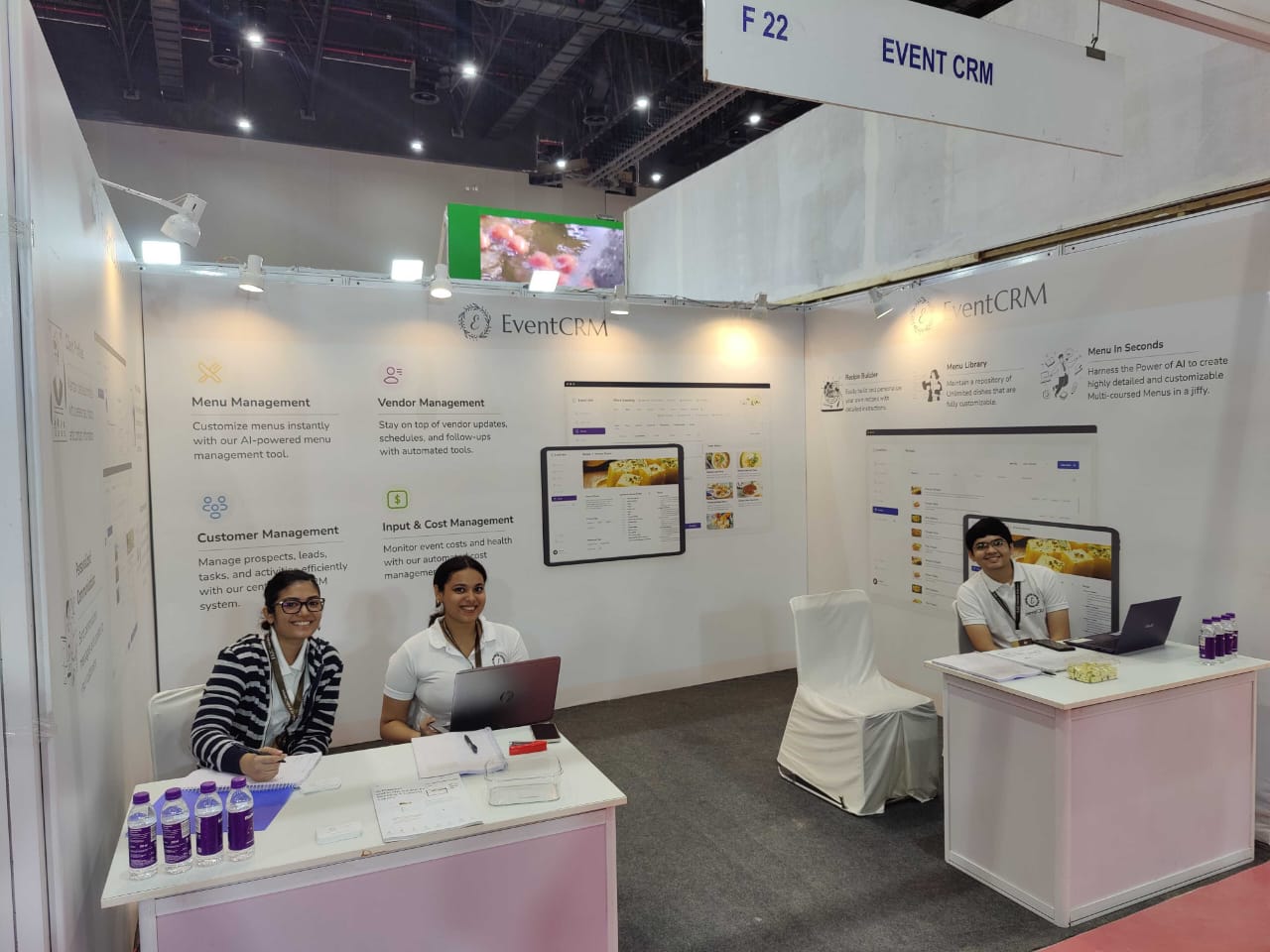
For every conversation, we captured notes about their workflows, challenges, and expectations, along with their visiting cards for follow-up discussions later.
These conversations became one of the most valuable parts of the project. Beyond validating our initial assumptions, they exposed a much wider operational ecosystem involving staffing, vendor coordination, billing, kitchen operations, and event logistics.
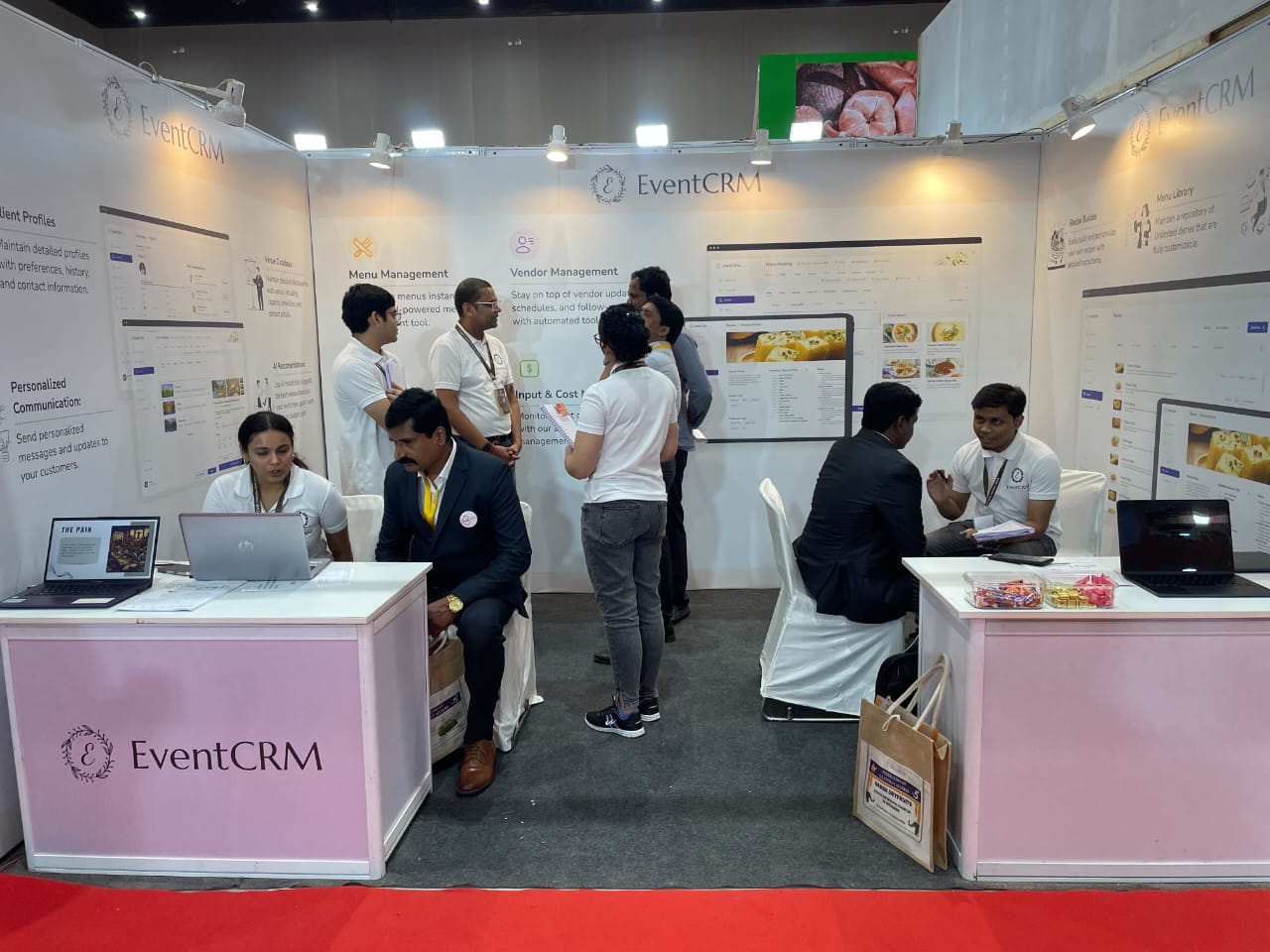
The experience fundamentally changed how I think about product research and domain understanding in traditional industries.
Building the Data Foundation
For menu generation to work reliably, the product first needed a structured understanding of dishes, ingredients, and dietary rules used across Indian catering workflows.
I helped build an extensive dataset where dishes and ingredients were tagged across multiple attributes such as:
Jain / Non-Jain
Vegetarian / Non-vegetarian
Sugar-free
Gluten-free
Alcohol
Vegan
This tagging system became the foundation for how EventCRM understood constraints, generated menus, and avoided invalid combinations during menu creation.
The goal was not just generating menus quickly, but generating menus that were operationally realistic and culturally accurate.
Designing the Menu Creation Workflow
The experience was designed around a simple real-world interaction: a caterer discussing event requirements with a client in real time.
The goal was not to replace the caterer’s expertise, but to reduce repetitive operational effort and accelerate the first stage of client discussions.

Instead of manually building menus over several days, EventCRM helped generate a strong first draft within minutes through a guided workflow that captured operational requirements like guest count, cuisines, dietary preferences, event duration, and meal structure.
Building a Flexible Recipe Catalog
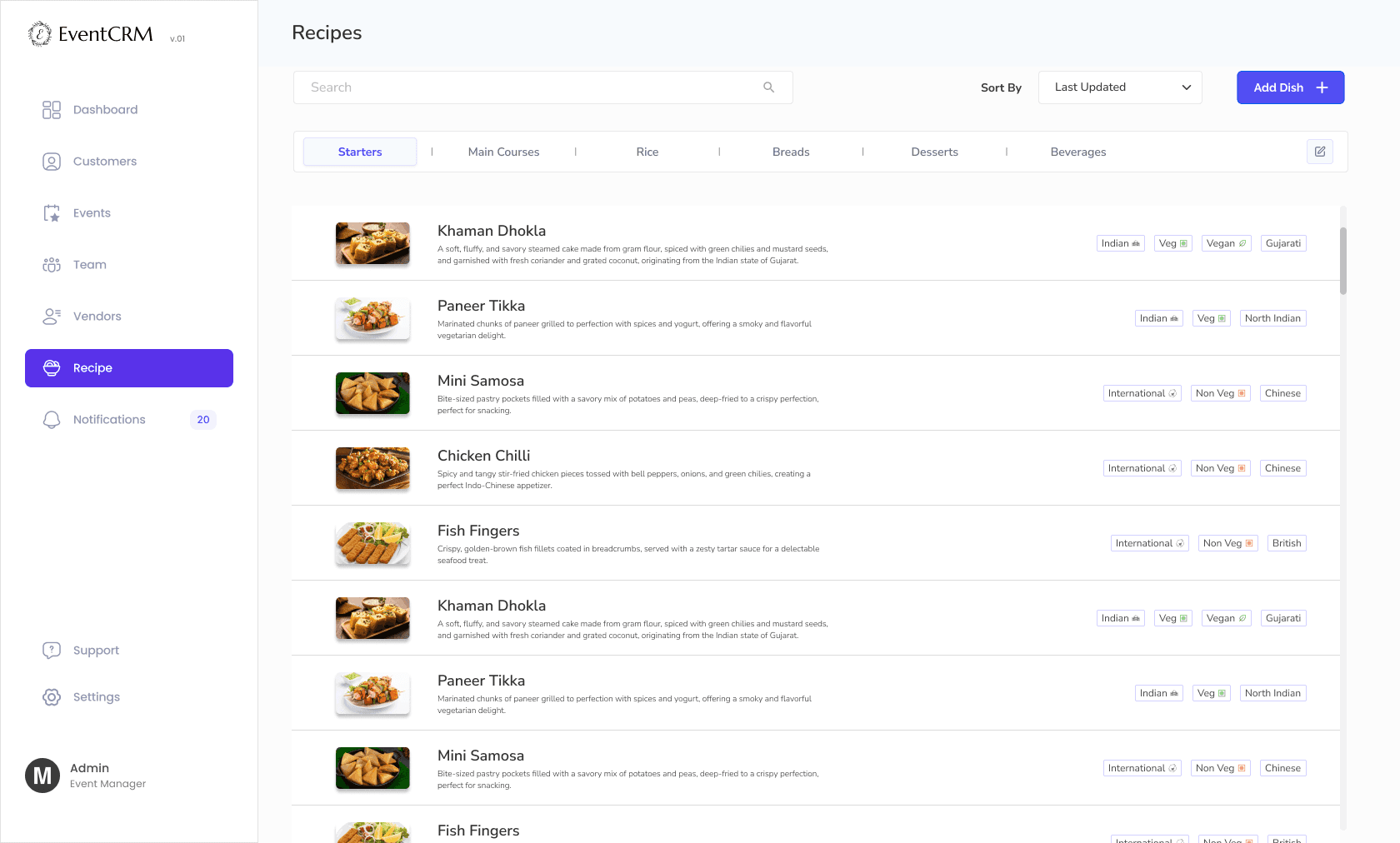
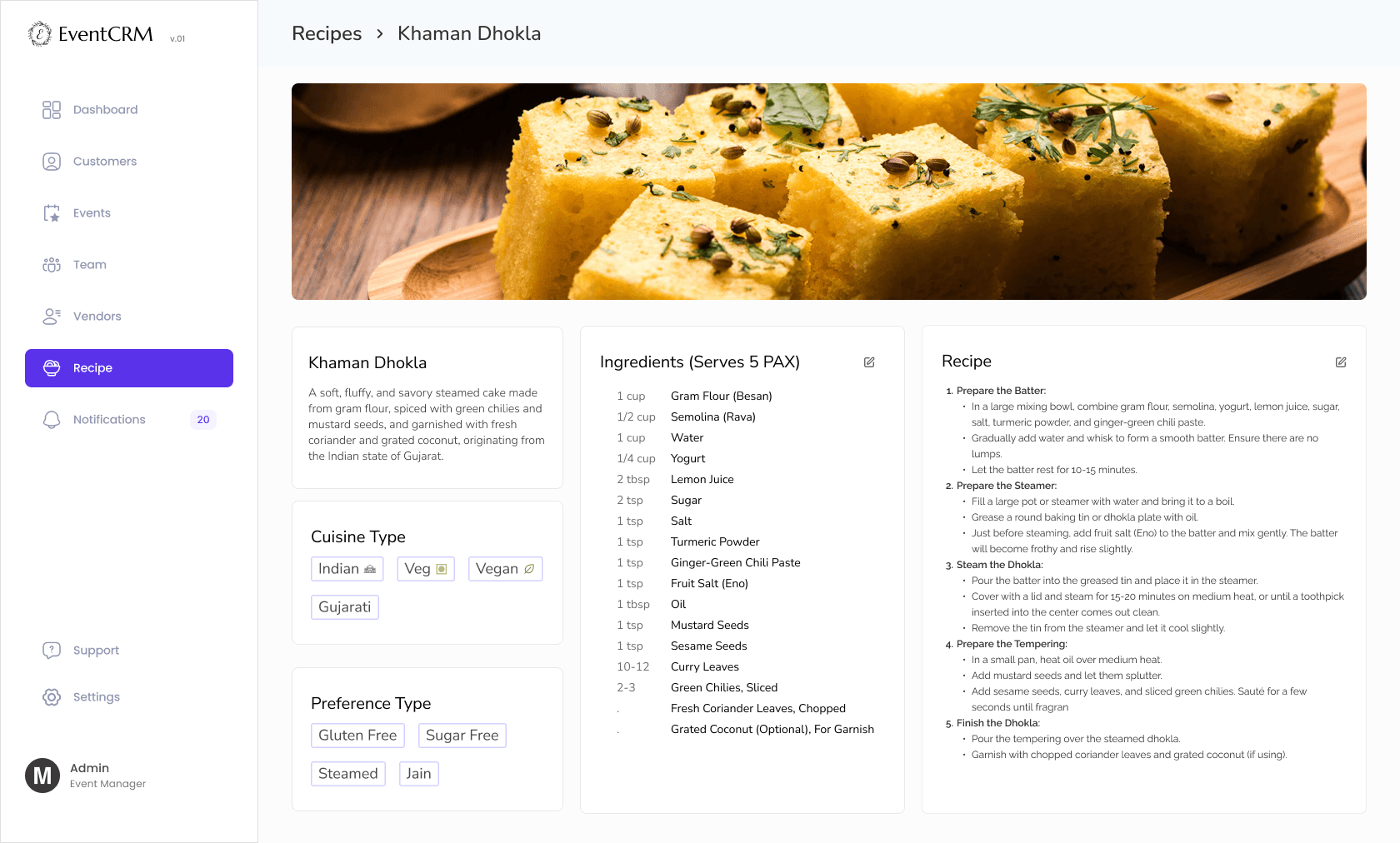
Different catering teams often prepare the same dish differently, using their own ingredient ratios, preparation styles, and dietary variations. To support this, EventCRM included a customizable recipe catalog where caterers could create, organize, and maintain their own dish libraries.
Each recipe could store:
ingredients
serving quantities
cuisine tags
dietary preferences
preparation instructions
custom categorizations
This helped turn the platform from a simple menu generator into a reusable operational knowledge base tailored to each catering business.
What We Learned About Adoption
EventCRM taught us that solving a real operational problem is only one part of building a successful product.
The catering industry operates in a highly time-sensitive environment where experimentation carries real business risk. Many caterers were hesitant to change workflows they had relied on for years, especially during peak wedding seasons where operational mistakes could directly affect clients and reputation.
We also learned that migration cost in traditional industries is not just technical, it is behavioral. Even when users recognize the value of automation, trust and habit play a major role in whether adoption actually happens.
These challenges ultimately shaped how we thought about onboarding, product trust, and introducing change in operationally critical industries.

Reflection
EventCRM was one of the most formative product experiences I’ve worked on.
It taught me how deeply operational knowledge influences good product decisions and how important real-world observation is when designing for non-digital-native industries.
More importantly, it changed how I think about product success. Building useful software is not enough on its own, adoption, trust, timing, and behavior change are equally important parts of the product journey.


